Black Mold Removal in Gresham, OR — Remove It Properly, Don't Panic
Found something dark and slimy after a leak or in a damp corner? Black mold should be removed properly — with containment so spores don't spread and the moisture source corrected — but the "it will kill you" framing is overstated. Here's a calm, accurate read on the real risk and how we handle it across Gresham ZIPs 97030 and 97080.
What Black Mold Actually Is
"Black mold" is the phrase that drives the most worry and the most marketing, so it is worth starting with what it really means. The species people usually have in mind is Stachybotrys chartarum, a greenish-black mold that grows on very wet, cellulose-rich materials — chronically damp drywall, wood, and cardboard. It earned its "toxic black mold" nickname because some molds, Stachybotrys among them, can produce compounds called mycotoxins under certain conditions, and that fact got stretched over the years into dramatic claims the science does not actually support. The real picture is calmer: it is a mold that signals a persistent water problem, and it should be removed properly — not feared into a panic.
An important and underappreciated fact is that color tells you very little. Many molds look black or dark green, and you cannot identify a species — or judge how hazardous it is — by sight alone. A dark patch in your bathroom or basement might be Stachybotrys or any of dozens of common, unremarkable molds. That is why we do not lead with the scary label; we lead with the response, which is the same regardless of what the growth turns out to be: contain it, remove it along with the affected porous materials, treat the surfaces, and fix the water feeding it.
Myth vs. Fact on the Health Risk
Here is the measured version, without the fear marketing. For many people, mold in small amounts is mostly a nuisance. For others — people with allergies, asthma, or weakened immune systems, and sometimes infants and the elderly — mold exposure can trigger real symptoms like sneezing, congestion, itchy eyes, throat irritation, and asthma flare-ups. The CDC and EPA describe mold as a common indoor allergen and asthma trigger, and that is the responsible framing. What the science does not support is the idea that ordinary household black mold will poison or kill an otherwise healthy person; reputable health agencies have not established that Stachybotrys causes the dramatic, unique harm often claimed online. None of this means you should ignore it — all indoor mold should be removed — but you should not panic either. We do not diagnose health conditions, and if someone in your home is having serious symptoms, that is a conversation for a doctor.
Where Black Mold Grows — It's a Moisture Signal
Black mold is, above all, a sign of sustained moisture, and it tends to appear exactly where water lingers. The classic spots are chronically wet drywall around a slow leak, the area beneath a window that sweats with condensation all winter, the lower corners of a basement, the framing behind a tub or shower, and the back of a wall where a plumbing drip has run unseen for months. Because Stachybotrys specifically needs materials that stay wet for a while — not just a one-time splash — its presence almost always points to an ongoing water problem rather than a passing accident. Finding dark growth is, in a sense, your home telling you where the chronic dampness is.
That is also why black mold so often hides. It grows behind drywall where a leak has soaked the cavity, under flooring, inside the insulation, and in the damp framing of a crawl space or the underside of attic sheathing — all the concealed places where moisture collects and never fully dries. By the time it shows on a visible surface, the colony behind that surface is frequently larger than what you can see. This is the core reason black mold is handled as a containment-and-moisture problem: the goal is to find the full extent and the water source, not just wipe the dark spot you happened to notice. Our broader our full mold remediation process is built around exactly that.
Why Proper Containment Matters for Black Mold Removal
The single most important thing to understand about removing black mold is that disturbing it releases spores into the air, and doing that without containment can turn a one-room problem into a whole-house one. Established, well-rooted growth on damp drywall is loaded with spores, and the moment someone starts scrubbing, cutting, or tearing it out, those spores go airborne and drift to clean rooms where they settle and, given any moisture, start new colonies. This is the difference between a professional removal and an untrained attempt, and with dark, mature growth the stakes are higher because there is usually more of it.
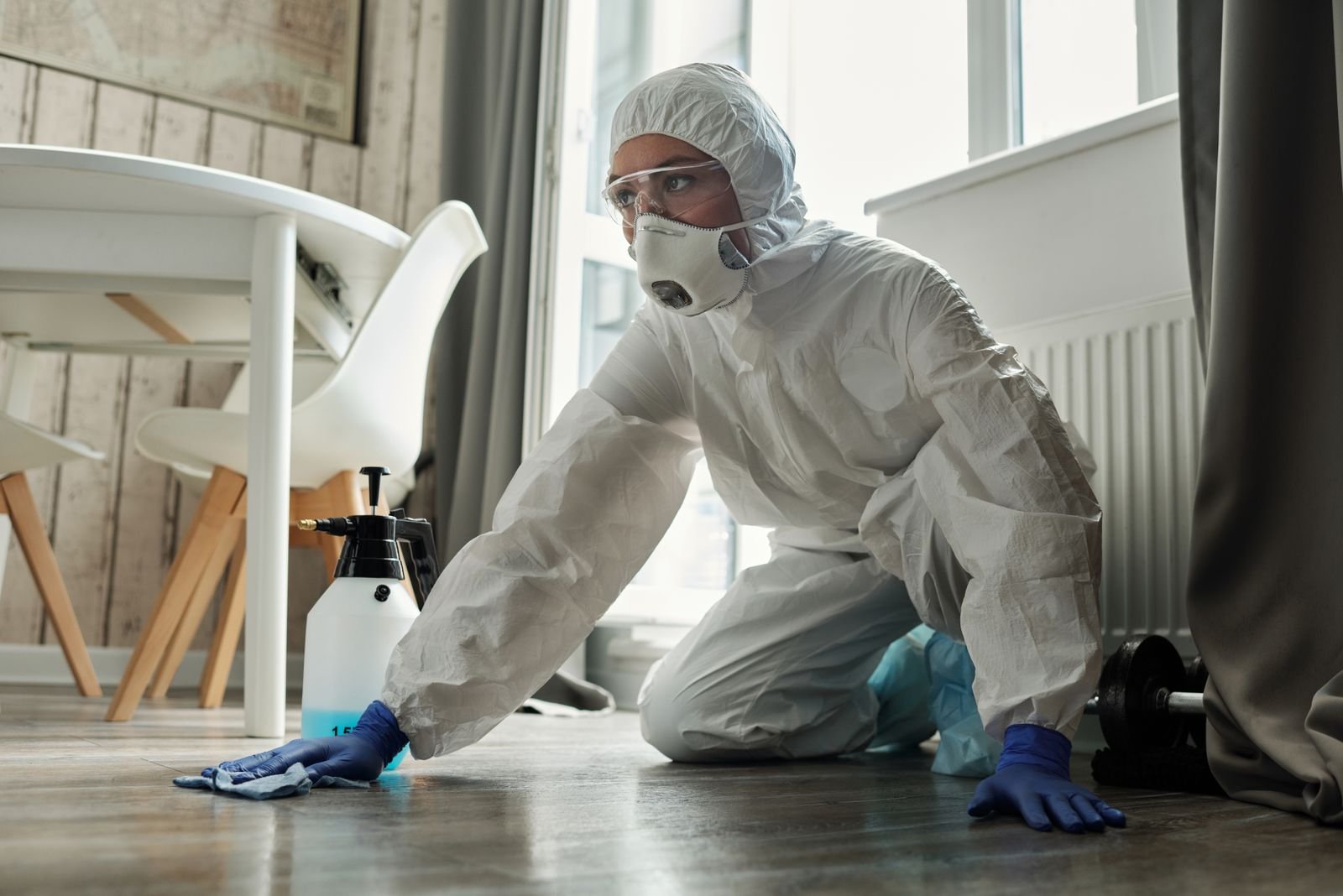
A proper black mold removal therefore starts by sealing the work area with plastic sheeting and barriers, then putting that containment under negative air pressure so air flows inward and is exhausted through HEPA filtration rather than escaping into the home. HEPA air scrubbers run continuously inside the containment while technicians physically remove the growth and the porous materials it has colonized — the saturated drywall and insulation that cannot be reliably cleaned. The remaining surfaces are HEPA-vacuumed, wiped, and treated with an antimicrobial, and then the structure is dried so the moisture that fed the mold is gone. The color of the mold does not change this method; it just makes doing it carefully more important. It is the same disciplined process as any serious all of our mold services job, applied with extra attention to not spreading spores.
DIY Limits and the EPA 10-Square-Foot Line
Can you remove black mold yourself? For a genuinely small surface spot — a few inches of growth on a hard, non-porous surface like tile or glass — a careful person taking precautions can clean it. But black mold on drywall or framing has typically grown into the material rather than sitting on top of it, and disturbing established growth without containment scatters spores through the house. The honest line is that established, hidden, or leak-linked black mold is not a do-it-yourself job; it needs containment, the right protection, and the equipment to remove it without spreading it.
| Situation | DIY? | Why |
|---|---|---|
| Small spot on tile or glass | Maybe, with precautions | Non-porous; mold sits on the surface |
| Growth on drywall or wood | No — call a pro | Rooted into porous material |
| Behind walls / hidden | No — call a pro | Disturbing it spreads spores |
| Tied to a leak or flood | No — call a pro | Source must be found and fixed |
| Larger than ~10 sq ft | No — call a pro | EPA threshold for professional work |
The boundary the EPA draws is its ten-square-foot guideline: a patch smaller than about ten square feet — roughly three feet by three feet — may be a reasonable do-it-yourself cleanup for a healthy person, while anything larger, anything tied to sewage or serious water damage, or anything in an HVAC system calls for a professional. And because the EPA and CDC are clear that there is no enforceable "safe" mold count, the goal with black mold is never a lab number — it is to remove all of the growth and fix the chronic moisture source that created the conditions it needs. If you want the species confirmed, that's what is for, but it doesn't change the plan: contain, remove, treat, and dry. You can see how we cover the wider city on our mold services across Gresham, OR page, or start with mold removal in Gresham.
Why Black Mold Thrives in Gresham Homes
Black mold needs sustained dampness, and Gresham's climate supplies it more readily than most. The Pacific Northwest runs a long, wet, cool season — close to eight months of rain — that keeps outdoor humidity high and pushes indoor relative humidity higher than homeowners realize. Stachybotrys does not grow on a surface that gets wet once and dries; it needs materials that stay wet, and a maritime winter that keeps things damp for weeks at a time is exactly the slow, chronic moisture it favors. That is why dark growth shows up here in the predictable wet spots rather than at random.
The same local trouble areas that drive mold in general are where black mold concentrates. Crawl spaces over bare soil stay damp when a vapor barrier is missing or torn, leaving the joists and subfloor wet enough for chronic growth from below. Attics collect condensation when warm indoor air meets cold roof framing or a bathroom fan vents into the attic instead of outside. Slow-drying leaks behind walls, around windows, and under fixtures round out the list — each one a pocket of the persistent dampness Stachybotrys requires. Removing the dark growth without fixing whichever of these is feeding it just resets the clock, which is why our approach treats the moisture correction as part of the job, every time.
Found Something Dark and Slimy? Don't Disturb It.
Leave it alone, avoid scrubbing or spraying it, and call. We'll get eyes on it, contain it so spores don't spread, remove it properly, and fix the moisture behind it — calmly and accurately, no fear marketing.
(971) 434-5079The Right Response: Contain, Remove, Correct
Black mold is a real concern worth handling properly, but it is not a reason to panic. The color does not change the goal — the response is the same careful, contained process used for any indoor mold, applied with extra attention to not spreading spores. Stay calm, don't disturb it, and let a local crew handle it right.
- Containment so spores don't spread
- Growth and porous materials removed
- Surfaces treated, structure dried
- Chronic moisture source corrected
Black Mold Questions, Answered
Calm, accurate answers to what Gresham homeowners ask about black mold.
Worried About Black Mold? Let's Handle It Right.
A calm, accurate read on the real risk, contained removal so spores don't spread, and the moisture source corrected for good. Tell us what you found and we'll take it from there.
(971) 434-5079Call a Mold Specialist