Professional Mold Removal Service — What Getting Mold Removed Really Means
"Get it removed" sounds simple, but proper mold removal is the physical extraction and cleaning of mold from the materials and surfaces it has colonized — done with HEPA capture, the right antimicrobial step, and safe handling of debris so it doesn't come straight back. Here's exactly what a professional does that a wipe-down can't, and where the DIY line really sits.
What Professional Mold Removal Involves
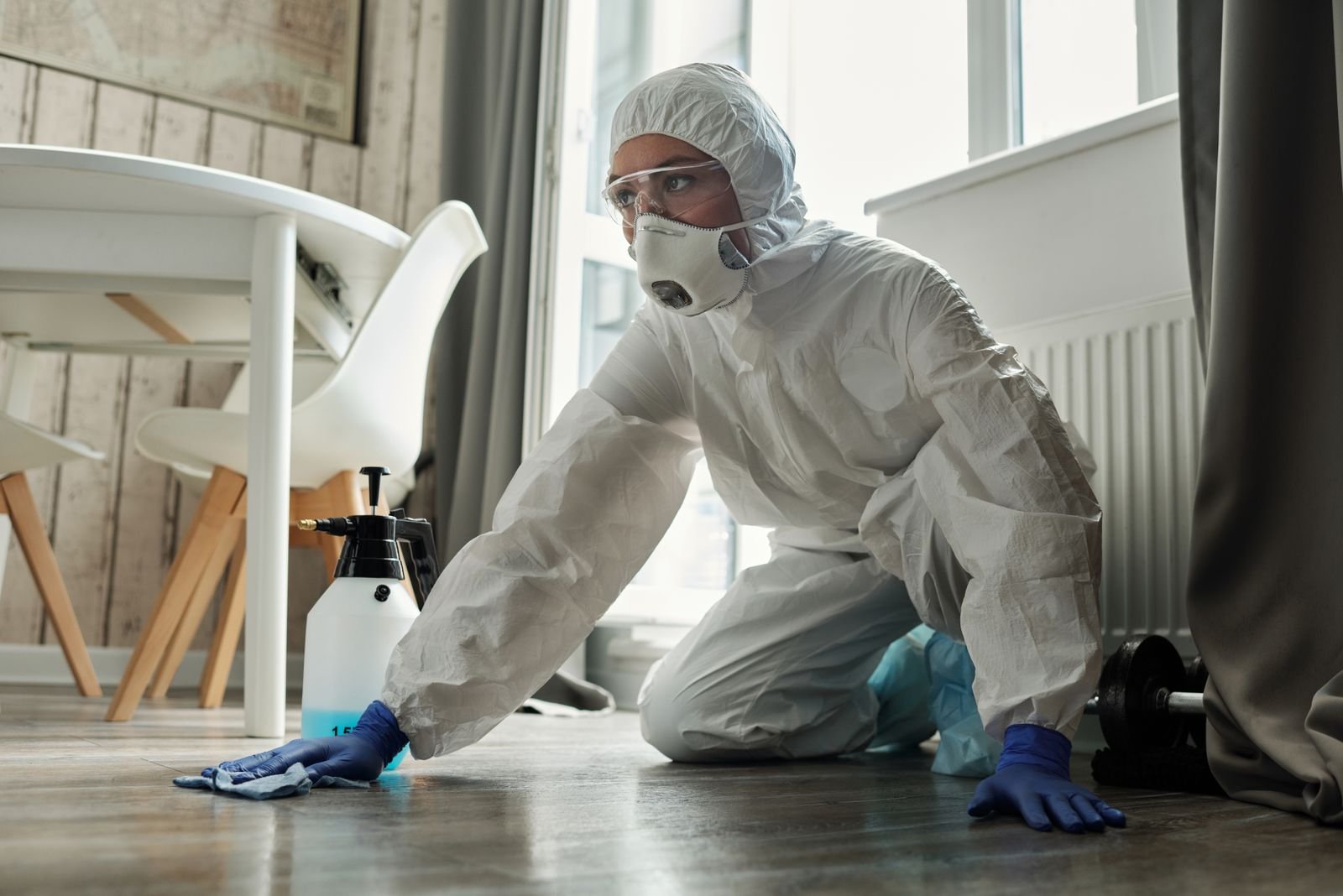
Professional mold removal is the hands-on work of physically getting mold out of a home, and it is more involved than wiping a stain off a wall. At its core it is extraction and cleaning: technicians physically remove the visible mold and the materials it has grown into, then clean the surfaces that remain. Throughout the work, a HEPA vacuum captures the fine spores that come loose during cleaning so they are pulled into a sealed filter instead of scattering into the air. Surfaces that stay in place are HEPA-vacuumed and wiped down, and an antimicrobial or biocide is often applied afterward to treat the cleaned material and discourage regrowth. The debris — the saturated drywall, the moldy insulation, the carpet padding that cannot be saved — is bagged and removed carefully rather than dragged through the house spreading spores.
What separates a professional removal from a casual cleanup is the discipline around all of that: capturing spores instead of releasing them, knowing which materials can be cleaned and which have to go, and treating the surfaces properly once the growth is gone. None of it works for long, though, without the other half of the job — correcting the water that caused the mold in the first place. Removal that ignores the moisture source is a temporary fix, which is why our approach always pairs the physical work with finding and fixing the leak, the condensation, or the ground moisture behind it. For the complete menu, see our complete list of mold services.
Cleaning vs. Removing Materials
One of the most important judgments in any mold job is deciding what can be cleaned and what has to be removed. Hard, non-porous surfaces — tile, glass, metal, sealed wood, finished countertops — can usually be cleaned and kept, because mold sits on top of them rather than rooting in. Porous materials are the opposite story. Saturated drywall, carpet and its padding, ceiling tiles, and soft insulation absorb water and let mold grow its hyphae deep into the structure, where surface cleaning cannot reach. The honest rule the industry follows is that mold-infested porous materials are generally removed, not just wiped, because there is no reliable way to clean a colony out of the inside of a piece of drywall. Trying to save unsalvageable material is one of the most common reasons a cheap removal fails.
The Tools a Professional Uses
The equipment is a big part of what you are paying for. A HEPA vacuum captures spores down to a fraction of a micron during and after cleaning. Air scrubbers with HEPA filtration scrub the air in the work area continuously. Plastic sheeting and tape build containment so the work zone is sealed off from clean rooms, and negative-air machines keep contaminated air inside that containment. Moisture meters confirm that materials are actually dry before anything is closed up, and antimicrobials treat the cleaned surfaces. A homeowner with a spray bottle has none of this, which is exactly why the EPA draws a line at which the job stops being a reasonable do-it-yourself task and becomes one for a professional.
Removal vs. Remediation — What the Difference Means for You
People use "removal" and "remediation" as if they are the same thing, but they describe different scopes, and the distinction matters when you are deciding what your home needs. Removal is the hands-on act — physically taking out and cleaning the mold and the materials it colonized. Remediation is the complete, standards-based process built around that act: assessing how far the mold has spread, containing the area so spores don't migrate, running HEPA air filtration, removing the mold, treating the surfaces, drying the structure, and correcting the moisture source. Removal is one step inside remediation. For a small surface patch, the removal step on its own may be all that's needed; for anything larger, the full process is what actually keeps the mold from returning.
| Aspect | Mold Removal | Mold Remediation |
|---|---|---|
| What it is | The physical extraction and cleaning step | The full controlled process, start to finish |
| Includes containment? | Not by itself | Yes — barriers + negative air |
| Air filtration | HEPA vacuum during cleaning | Continuous HEPA air scrubbing |
| Moisture source fixed? | Should be, but it's the cleanup focus | Built in — correction is required |
| Best for | Small, contained surface patches | Larger, hidden, or water-linked mold |
The practical takeaway is that the words matter less than matching the scope to the problem. A genuinely small, isolated patch on a non-porous surface can be a straightforward removal. The moment mold is behind walls, follows a water leak, covers a meaningful area, or sits in an attic or crawl space, the controlled remediation process is what makes the result last — you can read the full sequence on our the full IICRC S520 remediation process page. When you call, we tell you honestly which one your situation calls for rather than overselling a full remediation for a job that doesn't need it.
DIY vs. Professional Removal — the EPA 10-Square-Foot Line
The most useful boundary for deciding whether to handle mold yourself is the EPA's ten-square-foot guideline. Their rule of thumb is that an area smaller than about ten square feet — roughly a three-by-three-foot patch — is often a reasonable do-it-yourself cleanup for a healthy person using proper precautions. Above that, or where the mold sits behind walls, follows a water leak, or involves the HVAC system, it is time to bring in a professional with containment and the right equipment. The reasoning is not gatekeeping; it is that a larger or hidden problem needs containment to avoid spreading spores through the house, the experience to find the moisture source, and the gear to do it safely.
It also helps to understand what the goal of removal actually is, because the EPA and CDC are clear that there is no enforceable "safe" mold count to aim at. You are not trying to hit a number; you are trying to remove all the visible and accessible growth and fix the water that fed it. That reframing changes how you judge a job. A removal is not "done" because a lab figure dropped — it is done because the mold is physically gone, the unsalvageable porous materials are out, the surfaces are treated, and the moisture source is corrected. When the affected area is past the ten-square-foot line, a contained professional removal is genuinely the cheaper path once you factor in the cost of redoing a failed DIY attempt. If you're not sure where your situation falls, the smartest first move is to that measures the scope and finds the source.
Why Surface-Cleaned Mold Keeps Coming Back in Gresham
If you have cleaned mold off a wall only to watch it return weeks later, the cause is almost always the same: the moisture was never addressed, and in Gresham there is plenty of moisture to feed a comeback. The Pacific Northwest runs a long, wet, cool season — close to eight months of rain — that keeps outdoor humidity high and pushes indoor relative humidity higher than homeowners expect. When indoor humidity lingers above roughly sixty percent, mold can regrow on a freshly cleaned surface without any obvious leak at all, simply living off the dampness in the air. A surface wipe does nothing about that, which is why removal without moisture correction reliably fails here.
The chronic damp spots make it worse. Crawl spaces under Gresham homes sit over bare soil and stay wet when a vapor barrier is missing or torn, growing mold on the joists and subfloor from below. Attics collect condensation when warm indoor air leaks up into cold roof framing, and bathrooms and laundry areas generate humidity that never fully clears in winter. Cleaning the visible growth in any of these places without fixing the underlying water just resets the clock. That is the whole reason real removal pairs the physical work with a moisture fix — and why we treat the source correction as part of the job rather than an upsell. You can see how we handle the wider city on our mold removal across Gresham, OR page, or start with the basics of mold removal in Gresham.
Not Sure if It's a Wipe-Down or a Full Remediation?
We'll tell you straight. Some mold really is a careful do-it-yourself cleanup; some needs containment and a moisture fix. Tell us what you're seeing and we'll point you to the right level of work.
(971) 434-5079A Bottle of Bleach Is a Cosmetic Fix, Not a Removal
Reaching for bleach is the most common first move and the most common reason mold returns. Bleach is mostly water, and on porous materials the water soaks in while the bleach stays on the surface — so the roots growing down into the drywall or wood survive and regrow. It can lighten a stain enough to look solved while the colony is still alive underneath.
- Physical extraction, not just surface wiping
- Unsalvageable porous materials removed
- HEPA capture so spores don't spread
- The moisture source corrected for good
Mold Removal Questions, Answered
Straight answers to what Gresham homeowners ask about removal.
Ready to Get the Mold Gone for Good?
A local crew, the right tools, unsalvageable material removed, and the moisture source fixed so it doesn't return. Tell us what you're dealing with and we'll scope it honestly.
(971) 434-5079Call a Mold Specialist