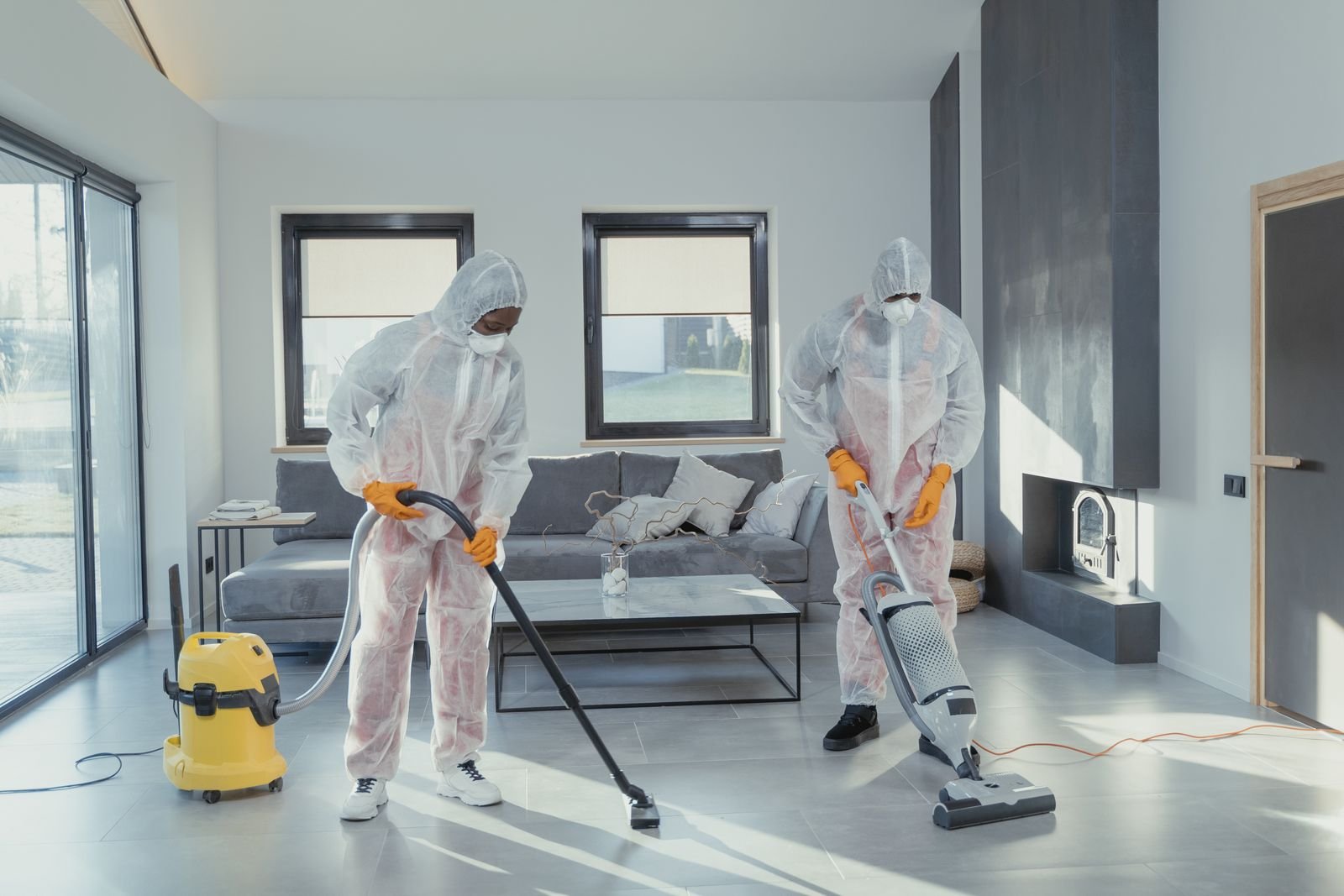
Post-Remediation Verification in Gresham, OR — Independent Proof the Job Passed
A mold remediation is not truly finished until someone confirms it worked. We provide independent visual, moisture, and air clearance that checks the work area against the criteria of the IICRC S520 standard — so you have documented proof before you move back in, close a sale, or settle a claim.
What Post-Remediation Verification Is
Post-remediation verification — commonly called clearance — is the final confirmation step that a mold remediation actually succeeded. It is the moment where, instead of taking the removal on faith, someone checks the work area against a defined set of criteria and confirms it is clean, dry, and back to normal. Under the IICRC S520 standard, verification is not an optional extra tacked onto the end; it is the built-in final stage of a proper remediation, the step that closes the loop between "we did the work" and "the work is confirmed done." When people talk about a mold job "passing clearance," this is what they mean.
The reason this step exists is straightforward: remediation can look finished and still not be. A work area can appear visibly clean while a pocket of moisture lingers behind a wall, or while the original water source was never truly corrected, or while disturbed spores have settled somewhere they should not be. Verification is the safeguard against all of that. It catches the gaps before you act on the assumption that the problem is solved — before you move furniture back in, hand keys to a buyer, or tell a tenant the unit is ready. For anyone who needs more than a contractor's word that the job is done, clearance is what turns a claim into documented proof.
The Clearance Criteria
A clearance is not a single test but a small set of checks that together confirm the remediation met its goal. Passing means satisfying all of them — a clean appearance is not enough on its own if the area is still damp, and dry materials are not enough if mold is still visible. Here is what each check looks at.
Visual Clearance
The first and most fundamental criterion is a visual one: the work area must be visibly clean, with no remaining mold growth, settled dust, or debris from the remediation. This sounds basic, but it is the foundation of the whole check — the S520 standard treats a visibly clean work area as a non-negotiable starting point, because no air or moisture result can make up for mold or debris you can still see. A careful visual inspection of all the surfaces that were part of the job confirms the physical removal was complete before anything else is considered.
Moisture Clearance and Source Correction
Because mold is a moisture problem, verification has to confirm the moisture is handled, not just the growth. That means checking that affected materials have been dried back to a normal moisture content and — just as importantly — that the original water source which caused the mold has actually been corrected. This is the criterion that protects the result over time: a work area can pass a visual and an air check the day it is finished and still fail the home if the leak or the dampness that started everything is left in place. Confirming the source is fixed is what separates a lasting clearance from a cosmetic one.
Air Clearance Against an Outdoor Baseline
Where appropriate, an air clearance sample compares the indoor air in the remediated area against an outdoor baseline taken the same day. The logic is comparative rather than absolute: because mold spores are a normal part of outdoor air, a successfully cleaned indoor space should show spore levels in line with — or below — what is outside, not some fixed magic number. An air sample is most useful as one input among the others, confirming that the contained work did not leave the indoor air meaningfully worse than the environment around the home. This is closely related to mold testing and air sampling used to investigate a problem, applied here specifically to verify a finished job.
What a Clearance Visit Involves
The order of a verification check, from first look to final report.
- Review the scope. We start by understanding what was remediated and where — the affected area, the materials removed, and the original moisture source — so the verification is aimed at the right places rather than a generic walk-through.
- Visual inspection. The work area is examined closely for any remaining mold growth, settled dust, or debris from the remediation. A visibly clean area is the non-negotiable starting point before anything else counts.
- Moisture readings. Affected materials are metered to confirm they have dried back to a normal moisture content, and the original water source is checked to confirm it was actually corrected — not just the surface cleaned.
- Air sampling where appropriate. When it adds value, an indoor air sample is taken alongside an outdoor baseline the same day, so the cleaned space can be compared against the environment around the home rather than a fixed number.
- Document the result. The findings are written up into a clearance report — pass or fail against the criteria — that you can hand to a buyer, an insurer, or a tenant as professional documentation the job was confirmed done.
Independent Third-Party Versus In-House Clearance
Who performs the clearance matters as much as what it checks. When the same company that did the removal also signs off that the removal passed, it is grading its own homework — and even with the best intentions, that is a built-in conflict of interest. Independent, third-party verification removes that conflict by having someone other than the remediation crew confirm the result, which produces a more credible and more defensible record. For routine peace of mind on a small job, an in-house check may be perfectly reasonable. But the more is riding on the outcome, the more the independence is worth. The table below frames the trade-off.
| Consideration | In-House Clearance | Independent (Third-Party) |
|---|---|---|
| Who verifies | The same crew that did the removal | A separate party, not the remediator |
| Conflict of interest | Present — grading its own work | Removed — no stake in the outcome |
| Credibility of the record | Fine for low-stakes peace of mind | Stronger, more defensible documentation |
| Best for | Small, straightforward jobs | Transactions, claims, and disputes |
| Holds up to scrutiny | May be questioned by other parties | Built to stand up to outside review |
The situations where independence is strongly preferred are the ones where documentation has to convince someone else: a real estate transaction where a buyer or lender needs assurance, an insurance claim where the result has to satisfy an adjuster, or a landlord-tenant dispute where both sides need a record they can trust. In those cases, an independent clearance is not bureaucratic box-ticking — it is what makes the proof actually count. You can see how the removal itself is performed on the mold remediation process page, or browse our complete mold services.
Remediation Done? Get Independent Proof It Passed Before You Move Back In.
Visual, moisture, and air clearance against the S520 criteria, documented by a party that did not do the removal. Tell us about the job and what you need the clearance for.
(713) 325-6192What "Passing" Really Means
It is worth being clear-eyed about what a clearance does and does not represent, because there is a lot of confusion around it. There is no universal numeric "pass" for mold. The EPA and CDC are consistent on this point: there are no federal standards or enforceable limits for mold or mold spores in indoor air, and no official count above which a home is "unsafe" or below which it is certified "safe." Anyone selling you a single magic number is overstating what the science supports. What a successful outcome actually means is concrete and sensible: the mold has been removed, the moisture that caused it has been corrected, and the indoor air is consistent with the outdoor environment rather than meaningfully worse than it.
That is also why it helps to understand what a clearance report is and is not. It is professional documentation that the verification criteria — visual, moisture, and where used, air — were met, prepared by someone qualified to assess them. That makes it genuinely useful and credible: it is the record you hand to a buyer, an insurer, or a tenant to show the job was confirmed done. What it is not is a government permit or a regulatory license; no such universal approval exists for mold. Holding both of those truths at once — that clearance is meaningful documentation and that it is not an official numeric certification — is exactly the measured, honest framing the EPA and CDC point toward.
Why Verification Matters in Gresham
In a climate as wet as Gresham's, verification earns its keep more than it might in a drier place. The Pacific Northwest runs roughly eight months of rain and high winter humidity, which means moisture is always looking for a way back in. That makes the moisture-clearance criterion — the confirmation that the original source was truly fixed, not just that the surface was cleaned — the single most valuable part of a clearance here. A remediation that cleaned the visible mold but left the leak, the condensation, or the damp crawl space behind it will not survive the next rainy season, and the only way to know the difference at the finish line is to verify the source, not just the appearance.
That is the practical reason independent post-remediation verification is worth doing in this area: it protects the result through the conditions that are most likely to undo it. Confirming the space is visibly clean, the materials are dry, the air is in line with outdoors, and — crucially — the moisture source is genuinely corrected is what gives a Gresham homeowner, buyer, or landlord confidence that the job will hold when the weather turns. We provide that verification as a service-area business across the city; we cover the citywide picture on our mold services across Gresham, OR page, and you can read about mold removal in Gresham generally.
Clearance Questions, Answered
Straight answers to what Gresham homeowners ask about post-remediation verification.
Need Proof Your Gresham Mold Job Passed? Call Now.
Independent visual, moisture, and air clearance against the S520 criteria, documented for your transaction, claim, or peace of mind. Tell us about the remediation and what you need the clearance for.
(713) 325-6192Call a Mold Specialist